


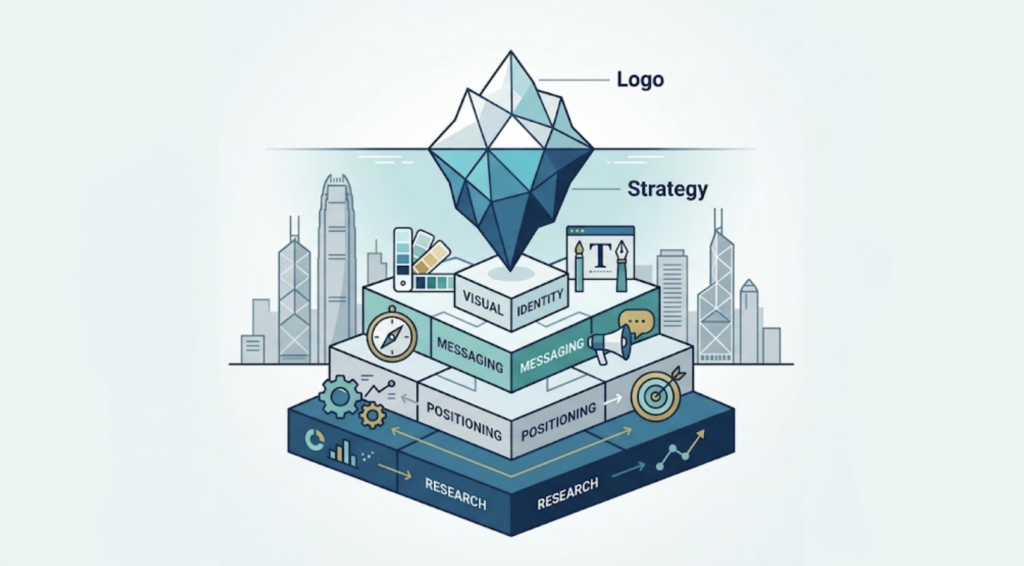
Most businesses that come to us asking for “a new logo” don’t actually need a new logo — they need a brand development strategy, and the logo is simply the visible tip of that work. Skipping the strategy and jumping straight to visual design is the single most common reason rebrands fail to move the needle on actual business results.
This guide lays out what brand development strategy actually involves, when a business needs it, and how it differs from simply commissioning new design work.
What Is Brand Development Strategy?
Brand development strategy is the process of defining what a company stands for, who it serves, how it’s positioned relative to competitors, and how that positioning should be expressed consistently across every touchpoint — before any visual design work begins. It answers questions like:
- What does this business do better or differently than competitors, in a way customers actually care about?
- Who is the specific audience, and what do they value?
- What tone, personality, and values should the brand consistently express?
- How should the brand be positioned in the market relative to direct competitors?
Only once these questions have real, specific answers does the visual identity work — logo, colour, typography — begin. A logo designed without this groundwork tends to be generically attractive rather than strategically effective, because it isn’t actually built to communicate anything specific.
The Core Stages of Brand Development
1. Discovery and research
Understanding the business from the inside (founder vision, operational realities, existing customer perception) and the outside (competitor landscape, market gaps, target audience needs). This stage is frequently rushed or skipped entirely by design-only providers, and it’s where the most valuable strategic insight actually surfaces.
2. Positioning definition
Distilling the discovery work into a clear, differentiated market position — the specific space the brand will own in customers’ minds relative to alternatives.
3. Brand personality and messaging
Defining tone of voice, key messaging pillars, and the personality traits the brand should consistently express across every piece of communication.
4. Visual identity development
Only now does visual design begin — logo, colour palette, typography — built to express the positioning and personality already defined, rather than chosen for aesthetic preference alone.
5. Guidelines and rollout
Documenting the system so it can be applied consistently as the business grows, across teams, vendors, and channels.
Why Skipping Strategy Is an Expensive Mistake
Businesses that skip directly to visual design — hiring a designer to “make us a logo” without the strategic groundwork — routinely end up commissioning a second rebrand within a few years, once it becomes apparent the identity doesn’t actually differentiate the business or resonate with the intended audience. The cost of doing strategy properly the first time is almost always lower than the cost of two rounds of visual design work bracketing a strategy gap in between.
Case study — strategy shaping the visual outcome: The brand identity work for Lai Ching Heen, a Michelin-starred and Black Pearl-recognised Cantonese restaurant, required more than an attractive logo. The strategic challenge was balancing the restaurant’s traditional Cantonese culinary heritage with its Michelin-level positioning — too traditional risked feeling dated, too contemporary risked losing the cultural grounding that defined its identity. That balance was resolved at the strategy stage, in decisions about tone and positioning, before a single typeface was selected — the visual execution followed directly from those strategic decisions rather than preceding them.
“The single question we ask clients most often isn’t ‘what colours do you like’ — it’s ‘what do you want a customer to feel three seconds after seeing your brand for the first time.’ Almost nobody can answer that clearly at the start of a project. Getting to a clear answer is the actual strategy work; the visual identity that follows is comparatively straightforward.” — Vince Cheung, Founder, VincDesign
Signs Your Business Needs Brand Development Strategy (Not Just a New Logo)
- Your current visual identity doesn’t reflect your actual positioning or quality level anymore
- You’re entering a new market segment or customer base
- Internal stakeholders can’t agree on or clearly articulate what the brand stands for
- Competitors’ brand presentation has made yours look weak by comparison
- You’ve grown significantly since your last brand work, and the identity feels disconnected from the business today
Brand Development Strategy vs. Rebranding: Are They the Same?
Closely related, but not identical. Brand development strategy is the process of defining or redefining brand positioning — it can happen at a company’s founding (new brand development) or later in its life (as the strategic phase of a rebrand). Rebranding is the broader initiative — strategy plus the resulting visual identity refresh plus rollout — that a business undertakes when its current brand no longer serves it. Strategy work is the foundation rebranding is built on, not a separate, optional add-on.
Frequently Asked Questions
How long does brand development strategy take?
The strategy phase alone (discovery through positioning definition) typically takes 3–5 weeks, depending on stakeholder availability for interviews and research depth required. Visual identity development follows afterward.
Do startups need brand development strategy, or just an early-stage business need a logo?
Even early-stage businesses benefit from at least a lightweight version of this process — clarity on positioning and audience prevents costly rework once the business scales and the “quick logo” no longer fits.
How much does brand development strategy cost?
As a standalone engagement, strategy work typically ranges from HK$30,000–80,000 depending on research depth and stakeholder complexity. It’s often bundled with the subsequent visual identity work as part of a full branding project.
Can I do brand strategy myself instead of hiring an agency?
Founders can and should have strong instincts about their business — that input is essential to the process. What’s harder to do internally is the objective, structured research and the outside perspective needed to see blind spots that come from being too close to the business.
What’s the difference between brand strategy and marketing strategy?
Brand strategy defines who you are and how you should be consistently perceived — it’s foundational and relatively stable over time. Marketing strategy is the tactical plan for reaching audiences and driving specific business results, built on top of that foundation, and it changes more frequently in response to campaigns and market conditions.
Ready to build a brand strategy that your visual identity can actually stand on? VincDesign has guided brand development strategy for over 100 Hong Kong businesses since 2013, recognised by the DFA Design for Asia Awards and HKDA Global Design Awards. Contact VincDesign →
