


In the fast-paced, highly competitive corporate hubs of Central, Kwun Tong, and Tsim Sha Tsui, networking is a daily art form. Despite the rapid digitalization of contact sharing, the physical exchange of a card remains a deeply ingrained sign of respect, ceremony, and professionalism in Asian business culture. If you want to make a lasting, tangible impression, settling for mediocre business cards hong kong professionals quickly forget simply is not an option.
At Vincdesign Branding Co. (https://www.vincdesign.com/), we understand that a card is rarely just a piece of paper; it is often the very first tactile interaction a potential client or partner has with your corporate identity.
The Strategic Importance of Professional Business Card Design
A meticulously crafted business card design does far more than deliver your phone number and email address. It acts as a silent brand ambassador. The weight of the paper, the texture of the finish, and the clarity of the typography all work together to communicate your company’s core values, market positioning, and meticulous attention to detail.
In a city that hosts thousands of international exhibitions and networking events annually, handing over a flimsy, poorly designed card can instantly diminish your credibility. Conversely, a premium card establishes immediate trust and authority, signaling that you invest in quality across all aspects of your business.
What Defines the Best Business Cards Hong Kong Has to Offer?
When analyzing the best business cards hong kong executives carry, several key design and production elements consistently stand out:
-
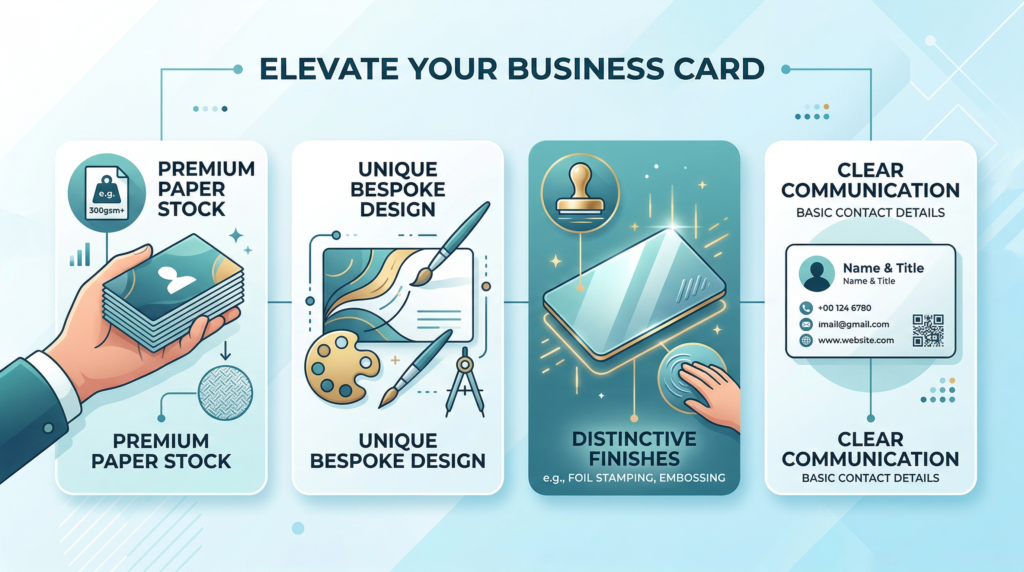
Premium Paper Stock: The tactile experience is paramount. High-quality cotton, textured linen, or ultra-thick matte cardstocks (typically 300gsm to 600gsm) provide a substantial, authoritative feel in the hand.
-
Impeccable Typography: Clean, legible fonts that align with your broader brand guidelines ensure your information is accessible while maintaining visual harmony.
-
Advanced Print Finishes: Techniques such as metallic foil stamping, blind embossing, debossing, or spot UV coating add a sophisticated, three-dimensional element that catches the light and the eye.
-
Bilingual Integration: To truly succeed in the local market, the most effective cards flawlessly balance English and Traditional Chinese without looking cluttered, respecting both international and local stakeholders.
The Advantage of Custom Business Cards Hong Kong
Relying on generic, pre-made templates is a missed opportunity for brand differentiation. The true value of custom business cards hong kong lies in bespoke tailoring. A custom approach ensures that every millimeter of the 90mm x 54mm canvas—the standard size in Hong Kong—is optimized to reflect your unique brand narrative.
Whether you are a disruptive tech startup looking for modern, minimalist die-cut edges, or a wealth management firm requiring classic, understated elegance with letterpress detailing, custom design translates your specific industry authority into a physical format.
Materials and Finishes: What Actually Makes a Business Card Feel Premium
A business card’s first impression happens before anyone reads a word on it — it happens the moment it touches someone’s hand. Paper weight, texture, and finish do more to signal quality than the logo printed on top.
Paper stock is where most of that impression starts. Standard 300gsm cards feel adequate but forgettable; premium options like 600gsm cotton stock or textured art paper carry noticeably more weight and signal that a business invested in the details. For hospitality and F&B brands especially, texture can reinforce brand personality — a rough, uncoated stock suits an artisanal bakery differently than a smooth, coated finish suits a law firm.
Finishing techniques are where a card moves from “printed” to “designed”:
- Foil stamping — adds metallic accents to a logo or name, catching light in a way flat ink never can. Works best used sparingly, on one or two key elements rather than the whole card.
- Spot UV — a glossy raised coating applied to specific areas, creating subtle texture contrast against a matte base. Popular for adding depth to logos without changing the color.
- Embossing/debossing — physically raises or presses text and shapes into the paper, giving a tactile quality that’s especially effective on thicker stock.
- Die-cut edges — custom-shaped cards (rounded corners, notches, unconventional silhouettes) that stand out simply by not being a standard rectangle.
The right combination depends on budget and brand tone. A minimalist tech startup might use a single spot UV accent on an otherwise clean card; a luxury retail brand might combine foil stamping with embossing for a fuller sensory effect. We typically recommend clients choose one or two finishing techniques rather than stacking several — restraint tends to read as more premium than excess.
From Concept to Print: What Working With VincDesign Looks Like
A business card project usually starts with understanding how the card fits into the broader brand system — colours, typography, and logo usage should feel consistent with everything else the business puts out, from packaging to signage.
Our process typically covers concept development (translating brand identity into a card layout), material and finish selection based on budget and use case, and print production coordination — including proofing physical samples before a full print run, since paper texture and foil colour can look different on screen versus in hand.
For brands looking to extend their identity beyond the card itself — into packaging, signage, or digital assets — our branding design portfolio shows how we’ve approached that kind of systemic brand work for clients across F&B, hospitality, and professional services.
Frequently Asked Questions About Hong Kong Business Cards
What is the standard business card size in Hong Kong?
The industry standard size in Hong Kong is 90mm x 54mm. Designing within these dimensions ensures your card fits perfectly into standard wallets and business card holders used throughout Asia.
What information is essential on a modern business card?
Keep it focused. Essential elements include your full name, professional title, company name and logo, direct phone number, professional email, and website. Depending on your industry, a minimalist QR code linking to a digital portfolio or LinkedIn profile can add immense value.
Why should I invest in a professional branding agency for my cards?
An agency looks beyond the isolated piece of paper. At Vincdesign Branding Co., we ensure your cards are a seamless extension of your overarching brand strategy, creating consistency across all your marketing touchpoints.
How long does a custom business card design and print process take in Hong Kong? Design typically takes 1–2 weeks depending on revision rounds, with printing adding another 3–7 working days depending on the finishing techniques chosen (foil stamping and embossing generally add extra lead time compared to standard offset printing).
What’s a reasonable budget range for premium business cards in Hong Kong? Costs vary significantly based on paper stock and finishing — a simple double-sided card on standard stock can start from a few dollars per piece, while cards with foil stamping, embossing, or die-cut edges can run several times that. We recommend discussing your budget upfront so material choices can be matched accordingly.
Make Your First Impression Count
Your business card is the lingering memory you leave behind after a handshake. It should be as compelling and professional as the services you offer. By investing in expert design and premium materials, you position yourself and your company for success in one of the world’s most dynamic business landscapes.
Ready to transform how the world perceives your brand? Connect with Vincdesign Branding Co. today to explore bespoke, high-impact design solutions tailored for your business.
