


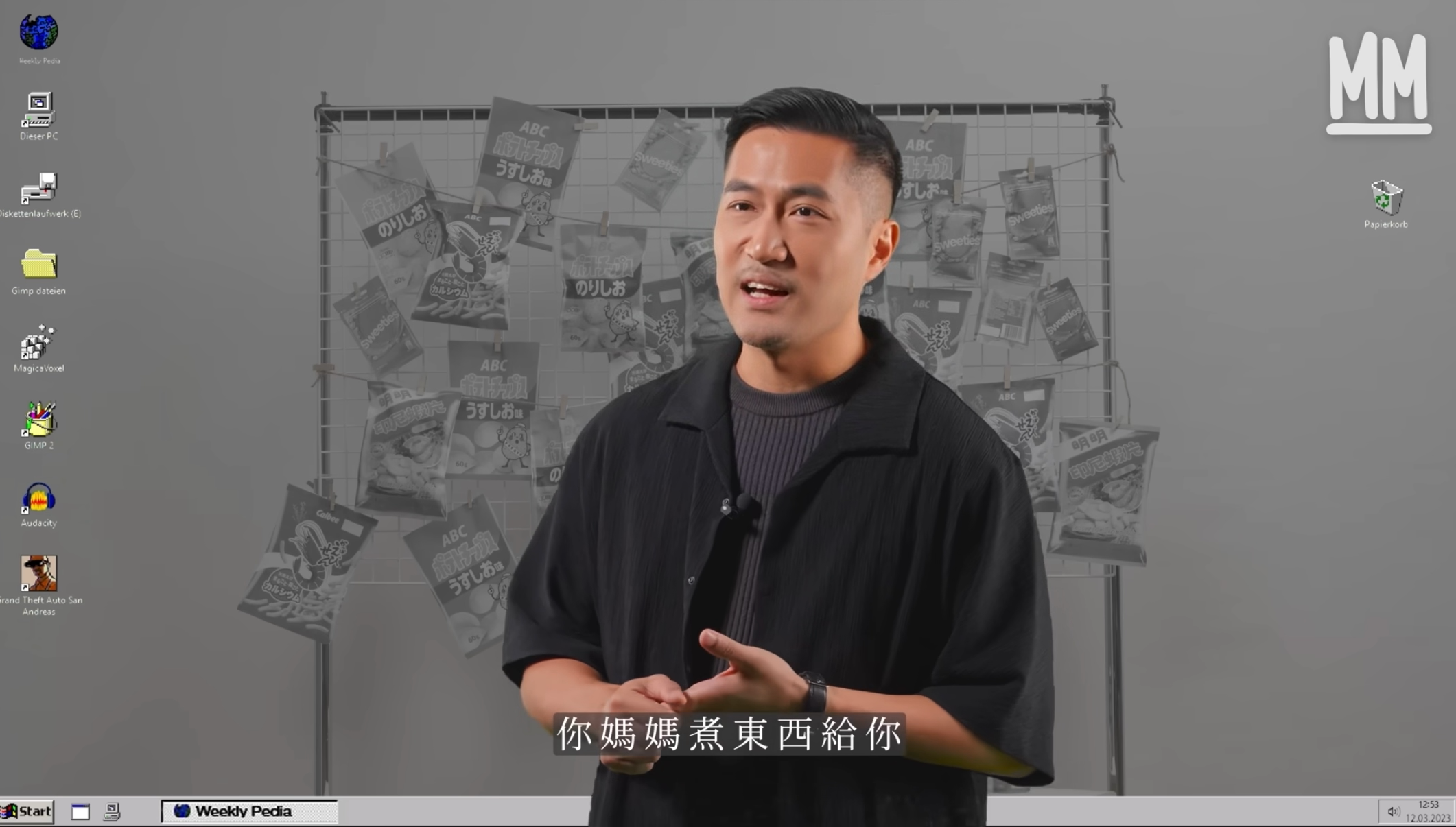
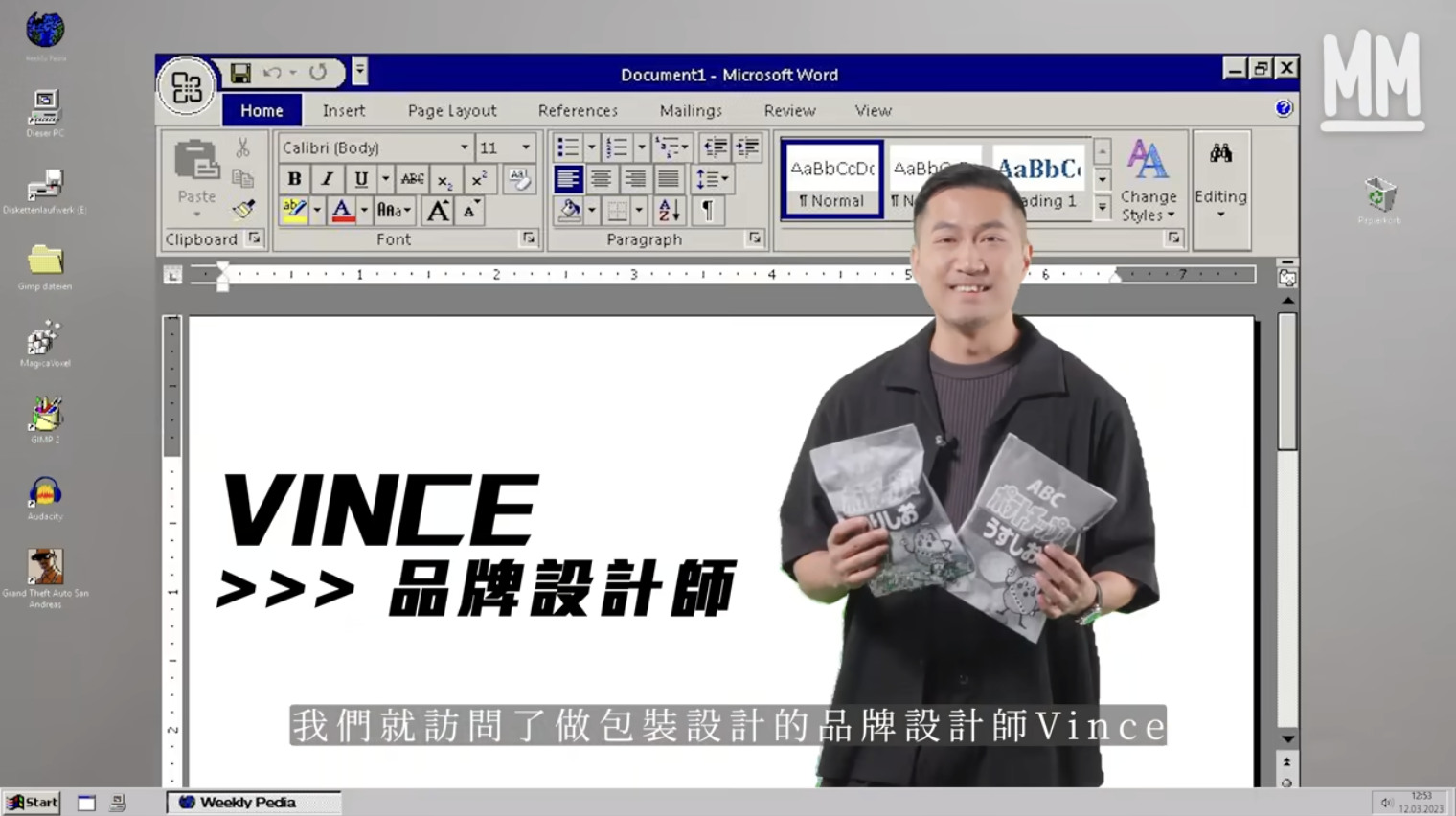
Vince Cheung, founder of Vincdesign Branding Co., was recently invited to Hong Kong’s immensely popular million-subscriber YouTube channel, Mill Milk (MM), to share the professional color knowledge and “Color Strategy” behind packaging design. He guides the audience through a brand designer’s daily perspective to decode the fascinating color secrets found on food packaging!
We are incredibly honored and delighted to be invited by Mill Milk! Vince Cheung, our founder and Creative Director at Vincdesign Branding Co., joined the show as a special guest.
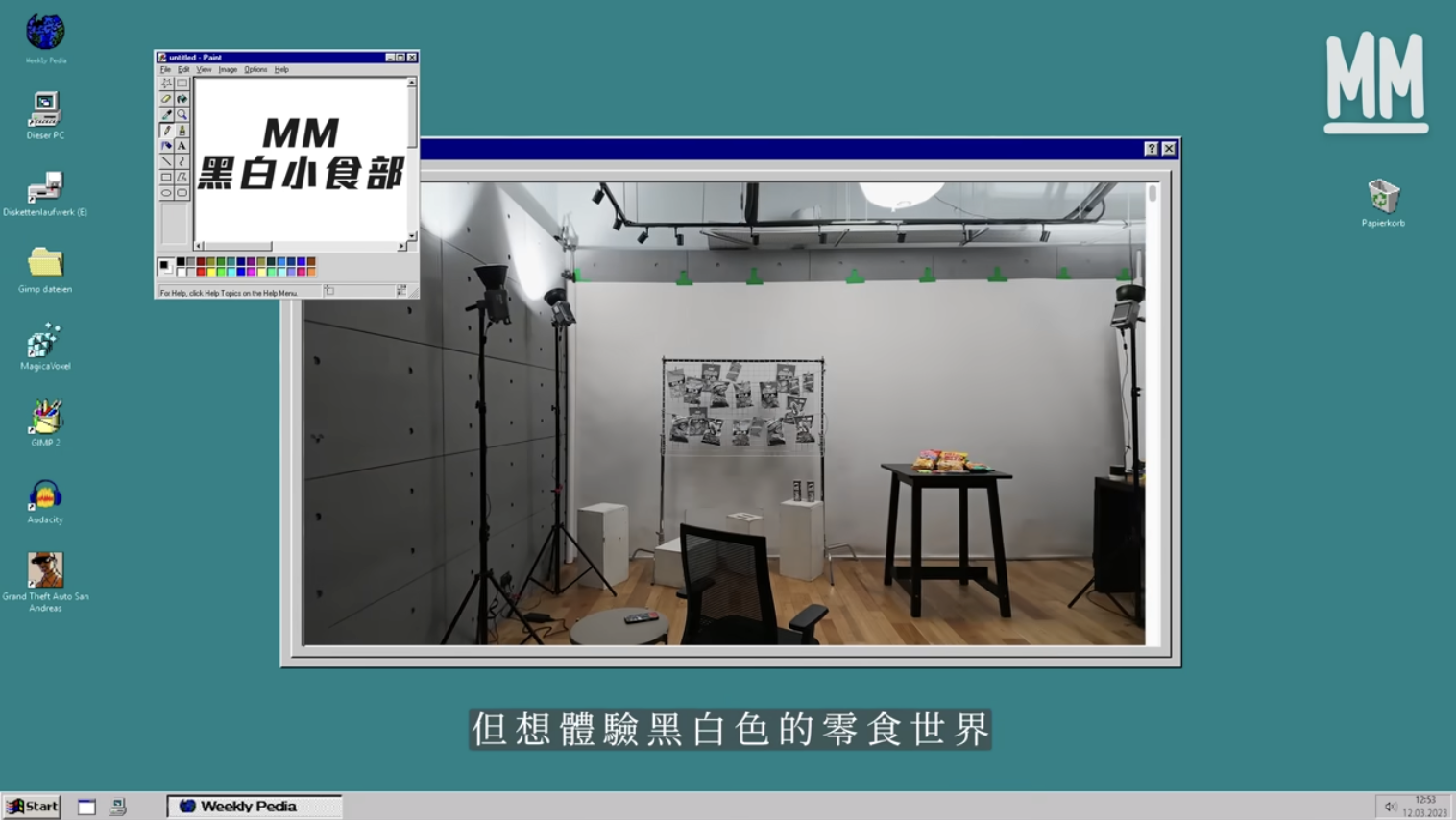
In this trending episode, the MM hosts step into a completely “black-and-white tuck shop” to conduct some wild taste tests, challenging themselves to identify snack flavors without any visual color cues. Meanwhile, Vince joins the conversation to casually chat about the professional color theories and strategic execution behind packaging design, helping the audience look past the surface to decode the fun and functional use of color in food marketing.
Will changing the packaging to black and white actually make cheese flavor taste like sour cream and onion? Is blue truly the legendary appetite killer? Click the link below to watch this fascinating, knowledge-packed episode:
👉 #MM|日本出黑白色薯片 原來可能會影響味覺?實測換晒黑白包裝 芝士味會變洋蔥? 原來藍色係食慾殺手?|#Weekly_pedia #4K
Let the Packaging Speak for Itself: The Pre-Coded Harmonization of Color and Flavor
In our daily lives, whether walking into a supermarket or a convenience store, the colors and visual information on a package determine our first impression of a product within a golden window of just a few seconds. As mentioned in the video, research indicates that over 72% of consumers make their purchasing decisions based on the packaging alone.
Vince shared on the show that this phenomenon boils down to “Visual Anchors” in consumer psychology. Everyone’s brain possesses a set of pre-coded flavor associations developed since childhood, rooted in life memories and natural laws (for instance, tomatoes are red, oranges are orange). When crafting a packaging system, designers use these exact color codes to communicate directly with the brain:
“Color is a brand’s most powerful silent language. Exceptional packaging design often completes flavor suggestions and brand positioning through its color system before a consumer even reads the product name. When visuals resonate with the consumer’s deep-rooted memories, the packaging naturally ‘speaks for itself.'” —— Vince Cheung
Shelf Psychology: Vincdesign Branding Co.’s Expert Packaging Color Strategy
In highly competitive retail and e-commerce environments, a brand often has less than 0.5 seconds of attention on the shelf. In the video, Vince shares some of our core principles regarding the logic of color application in food packaging from our daily design practice:
-
🔴 The Attention-Grabbing “Red, White & Yellow”: If the goal is to instantly catch eyes on a supermarket shelf, red and yellow are typically the go-to choices for fast-moving consumer goods (FMCG). These warm tones are not only highly eye-catching but also effectively stimulate gastric secretion and boost appetite.
-
🟢 The Balanced “Natural Green”: When conceptualizing products that promote health, natural ingredients, or organic origins, we restrain high-saturation visual impacts. Instead, we opt for green or balanced color tones to convey a clean, wholesome, and reassuring product message.
-
⬛ The Value-Adding “Luxury Black”: Black is rarely used across large surface areas in conventional food packaging. However, Vince pointed out a fascinating phenomenon: “If you want to position a product as premium and luxurious, simply pair it with a solid black background and place a single potato chip in the foreground—its perceived value skyrockets instantly!”
-
🔵 The Challenging, Double-Edged “Blue”: Since blue food is exceptionally rare in nature, the human brain easily associates it with toxicity or spoilage. Yet, Vince views blue as an excellent tool for “differentiation.” For instance, when a product features marine elements or is applied to high-end cookie gift boxes, a tailored Royal Blue can instead evoke a highly contemporary, personalized, and premium brand aura.
In-Depth Dialogue: The Symbiotic Relationship Between Packaging Design and Brand Design
In the latter half of the video, the MM team explores several intriguing historical business cases—such as M&M’s successfully introducing blue chocolate buttons through a public vote. Conversely, Heinz launched green ketchup in 2000, which initially boomed due to the novelty factor but eventually plummeted in sales because it severely conflicted with consumers’ foundational flavor perceptions.
This highlights a core question: What exactly is the relationship between Packaging Design and Brand Design?
In the philosophy of Vincdesign Branding Co., these two are never mutually exclusive. Packaging is essentially the tangible, physical extension of brand design, serving as the front line for creating a cohesive Brand Language.
1. Packaging as a Three-Dimensional Carrier of Brand Language
Brand design (such as logos, typography, and core values) acts as the abstract soul, while packaging design serves as the tangible body that consumers can see and touch. Through paper texture, printing craftsmanship (such as spot UV and embossing), and the curation of Visual Hierarchy, we “translate” a brand’s unique personality and attitude into a language the consumer intuitively understands.
2. Building Exclusive Visual Assets Through Packaging
Successful differentiation cannot rely solely on short-lived novelty. The temporary “black-and-white potato chip packaging” introduced by a Japanese brand due to ink costs successfully sparked a massive online buzz because it disrupted conventions in a mature market. In the long run, however, a brand must build continuous visual assets through its packaging. When an entire product line is arranged neatly on a shelf, even if you cover the logo, consumers should be able to recognize the brand purely by its unique color blocks or illustration style—this is the power of using packaging to successfully establish a brand language.
3. Design in Service of Business Strategy
True Shelf Impact means weaving creativity around a core business strategy. Precise packaging design not only lowers consumer decision-making friction but also elevates a single purchase into a long-term sense of brand loyalty and identity through a delightful Unboxing Experience.
We are truly thrilled to have collaborated with the Mill Milk team. Through such a lively and engaging feature, we were able to share our passion for branding and packaging design with a broader audience. Whether it is black-and-white potato chips or vibrant Skittles, the universe of color and design is far more strategic than one might think. We look forward to continuing to bring more visual surprises to everyday life through design in the future!
 to Share Professional Color Knowledge Behind Packaging Desgin)